How to Start a Sustainable Fitness Routine That Actually Lasts
Strength training can feel intimidating at first, but it doesn’t have to be complicated or dangerous. With a simple plan and good technique, you can build strength, protect your joints, and improve your health for years to come.
Below is a clear, no-nonsense guide to getting started safely.
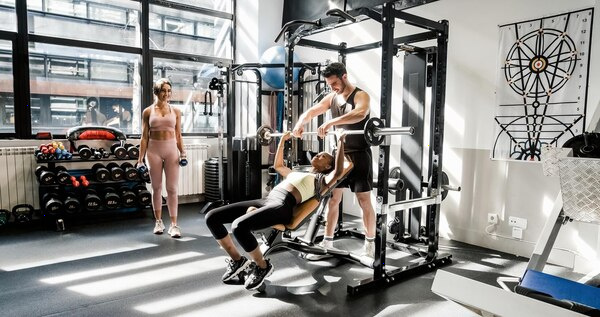
Why Strength Training Matters
Strength training isn’t just for athletes or bodybuilders. It’s one of the best things you can do for your overall health.
Key benefits:
- More muscle, less fat – Building muscle increases your metabolism, helping you burn more calories even at rest.
- Stronger bones and joints – Resistance training helps prevent osteoporosis and reduces injury risk.
- Better posture and less pain – Strong muscles support your spine and joints, reducing back, neck, and knee issues.
- Improved daily function – Carrying groceries, climbing stairs, lifting kids, or doing housework becomes easier.
- Better mood and energy – Strength training can reduce anxiety and depression and improve sleep quality.
If you’re new, you don’t need heavy weights or complex equipment. You just need consistency, patience, and attention to form.
Basic Principles for Beginners
Before touching a weight, understand these simple principles:
- Technique comes first
Good form prevents injury and makes each exercise more effective. Never sacrifice technique to lift heavier.
- Start light, progress slowly
Use a weight that feels easy at first. You’ll increase it over time. It’s better to leave the gym feeling like you could do more than to push to the point of pain or exhaustion.
- Recover between sessions
Muscles grow and get stronger when you rest, not when you train. Beginners usually do well with 2–3 strength sessions per week, with at least one rest day between them.
- Consistency beats intensity
Training regularly with moderate effort is more effective than sporadic “all-out” workouts.
- Pain is a warning
Discomfort from effort is normal (muscle burning, fatigue), but sharp, stabbing, or joint pain is not. Stop and adjust if you feel this.
How Often Should You Train?
For most beginners:
- 2–3 full-body workouts per week are ideal.
- Rest days in between: for example, Monday–Wednesday–Friday or Tuesday–Thursday–Saturday.
This schedule gives your muscles time to recover, especially when you’re just starting.
Warm-Up: Preparing Your Body
Never skip your warm-up. It prepares your muscles and joints and reduces injury risk.
A simple 8–10 minute warm-up:
- General warm-up (3–5 minutes)
- Brisk walking, light cycling, or marching in place.
- Goal: Slight increase in heart rate and body temperature.
- Dynamic movements (5 minutes)
- Arm circles
- Leg swings (front-to-back, side-to-side)
- Bodyweight squats
- Hip circles
- Torso rotations
Keep movements smooth and controlled. Avoid long static stretches before lifting; those are better after the workout.
Key Movement Patterns (Not Just Muscles)
Instead of thinking about “chest day” or “arm day,” beginners should learn basic movement patterns. These movements train many muscles at once and are more helpful for real life.
Core movement patterns:
- Squat – Bending at hips and knees to sit down and stand up.
- Hinge – Bending at the hips while keeping the back neutral (e.g., picking something up from the floor).
- Push – Pushing weight away from you (horizontally like a push-up, or vertically like an overhead press).
- Pull – Pulling weight toward you (rows) or yourself toward something (like a pull-up).
- Carry / Core stability – Holding or carrying weight while keeping your body stable.
If your routine includes these patterns, you’ll train your entire body efficiently.
Simple Beginner Exercises
Here are safe, effective variations for each pattern. Start with bodyweight or light weights.
1. Squat Pattern
Bodyweight Squat
- Stand with feet about shoulder-width apart, toes slightly outward.
- Brace your core (like you’re preparing to be lightly punched in the stomach).
- Keep chest “proud” (not collapsed), eyes forward.
- Push hips back slightly, then bend knees to lower your body as if sitting into a chair.
- Keep knees in line with toes (don’t let them cave inward).
- Go as low as comfortable while keeping heels on the floor and back neutral.
- Push through your mid-foot and heel to stand back up.
If this is hard, you can start with:
- Chair Squat: Sit down on a chair, lightly touch it, and stand back up.
- Support Squat: Hold onto a stable object (like a countertop) for balance.
2. Hinge Pattern
Hip Hinge (with or without light weights)
- Stand with feet hip-width apart.
- Slight bend in knees (but not a squat).
- Push your hips back like you’re trying to close a car door with your butt.
- Keep back straight (neutral), chest slightly lifted, neck in line with spine.
- Lower torso until you feel a stretch in your hamstrings (back of thighs).
- Squeeze glutes (butt muscles) to return to standing.
Once comfortable, you can add light dumbbells or a kettlebell (for a Romanian deadlift or kettlebell deadlift).
3. Push Pattern
Wall or Incline Push-Up
- Place hands on a wall, table, or countertop, slightly wider than shoulder-width.
- Walk feet back so your body forms a straight line from head to heels.
- Brace your core.
- Lower chest toward the surface, keeping elbows at about a 45-degree angle from your body.
- Push back to the starting position.
As you get stronger, lower the surface gradually (from wall → countertop → bench → floor).
4. Pull Pattern
If you have access to equipment:
Dumbbell Row (one arm)
- Place one hand and knee on a bench or stable surface.
- Other foot on the floor, other hand holding a dumbbell.
- Keep back flat, core engaged.
- Let the dumbbell hang straight down.
- Pull the weight up toward your hip, squeezing your shoulder blade back.
- Lower slowly with control.
If you’re at home with no equipment:
- Use a backpack with books as weight.
- Or perform bodyweight rows under a sturdy table or using suspension straps, if available.
5. Core and Carry
Dead Bug (Core Stability)
- Lie on your back, arms extended toward the ceiling.
- Bend hips and knees 90 degrees (shins parallel to the floor).
- Flatten your lower back gently into the floor by bracing your core.
- Slowly lower your right arm and left leg toward the floor while keeping back flat.
- Return, then switch sides.
Farmer’s Carry (if you have weights)
- Hold a dumbbell or similar weight in each hand at your sides.
- Stand tall, shoulders back and down, core braced.
- Walk slowly for 20–30 seconds while keeping good posture.
A Simple Full-Body Beginner Routine
Here is a basic 2–3 day per week plan. Do this routine every session at first.
Perform:
- 2–3 sets of each exercise
- 8–12 repetitions per set
- 60–90 seconds rest between sets
Exercises:
- Squat or Chair Squat
- Hip Hinge (bodyweight or light weights)
- Incline Push-Up (wall, table, or bench)
- Dumbbell or Backpack Row
- Dead Bug (each side)
- Optional: Farmer’s Carry (20–30 seconds)
Progression guidelines:
- When an exercise feels easy and you can do 12 reps with perfect form,
- Add a little weight, or
- Make the movement slightly harder (for example: lower your push-up surface).
Aim to progress 1 small step at a time.
How to Choose the Right Weight
For beginners:
- Choose a weight you can lift with good form for about 8–12 reps.
- The last 2–3 reps should feel challenging but still controlled.
- You should feel like you could do 1–2 more reps if you had to.
If:
- You can easily do more than 12 reps → increase weight slightly next time.
- You can’t reach 8 reps with good form → the weight is too heavy; reduce it.
Common Mistakes to Avoid
- Skipping warm-up
This increases the risk of strains and joint discomfort.
- Using momentum
Swinging weights or rushing reps reduces effectiveness and stresses joints. Move with control.
- Holding your breath
Exhale on the effort (when you push, pull, or stand up), inhale on the easier phase.
- Training too often, too hard
Soreness is normal, but extreme soreness that lasts many days is a sign of doing too much too soon.
- Ignoring pain signals
Don’t push through sharp or joint pain. Adjust technique, reduce weight, or stop the exercise if necessary.
Safety Tips
- If you have medical conditions (heart issues, high blood pressure, joint problems, recent surgery, or are pregnant), speak with a doctor before starting.
- Use stable surfaces and secure equipment.
- Stay hydrated and avoid training in very hot environments without breaks.
- If something feels “wrong” rather than just hard, stop and reassess.
Stretching and Cooling Down
After your workout:
- Spend 5–10 minutes doing light walking and gentle stretching.
- Focus on muscles you used: chest, shoulders, back, hips, hamstrings, quads, calves.
- Hold each stretch for about 20–30 seconds, breathing slowly. Avoid bouncing.
This helps reduce stiffness and may aid recovery.
How Long Until You See Results?
You may notice:
- Better energy and mood within 1–2 weeks
- Improved coordination and confidence with movements in 2–4 weeks
- Visible changes in strength and muscle tone in about 6–12 weeks, if you’re consistent
Progress is not always linear. Some weeks will feel easier or harder than others. Focus on the long-term habit.
Staying Motivated
- Set simple, clear goals:
- Example: “Train 2 times per week for the next month.”
- Or: “Add 1 rep to my squats each week.”
- Track your workouts:
- Write down exercises, weights, sets, and reps. Seeing progress is motivating.
- Focus on performance, not just appearance:
- Notice how much easier daily tasks feel.
- Celebrate strength milestones: a deeper squat, more push-ups, or heavier weights.
- Be patient and kind to yourself:
Everyone progresses at a different pace. Consistency is more important than perfection.
When to Consider Getting Help
If possible, consider:
- A qualified personal trainer for a few sessions to check your form and design a plan.
- Online or in-person beginner classes that emphasize safe technique.
This is especially useful if you have previous injuries, chronic pain, or no experience with exercise.
Strength training is one of the most powerful tools you have for better health, confidence, and independence. Start simple, respect your body, and focus on building a habit. Over time, the weights will increase, your movements will feel more natural, and you’ll be surprised at how strong you can become.